
Why Global Food Supply Chains Are Looking to Africa in 2026
)
For decades, global food trade has relied on a familiar map: a handful of sourcing markets, predictable freight corridors and long-established production hubs. In 2026, that model has been tested like never before.
Conflict, shipping disruption, volatile freight rates and rising input costs are exposing the risks of overdependence on traditional supply routes. For food and beverage companies, diversification has become essential and the search for new certainty is turning attention toward Africa.
Historically viewed as an export source for selected commodities, Africa is now emerging as a serious force in the next chapter of global food trade.
With strategic access to major sea lanes, expanding port infrastructure, growing manufacturing capability and one of the world’s richest agricultural resource bases, the continent offers far more than an alternative route.
From ports in Kenya, Mozambique and South Africa to inland production corridors connecting regional markets, Africa is becoming an increasingly important link between Asia, the Middle East, Europe and the wider global economy.
Africa’s Expanding Agricultural Power
If there is prolonged disruption across key trade routes, including the Strait of Hormuz, the impact will extend into global planting cycles and input availability for the 2026/27 season. This is accelerating a shift in focus toward where agricultural resilience can be built.
Across Eastern Africa in particular, demand is rising for precision irrigation, drone spraying, bio-stimulants, soil sensors and low-input, climate-resilient seed varieties.
These are no longer future technologies; they are becoming essential tools for increasing output and stabilising production under pressure.
The biggest opportunity now is in scaling: expanding agritech deployment, improving fertiliser access and strengthening regulatory environments that support investment, input availability and production growth.
Across several African markets, policy is increasingly aligned with this agenda, creating stronger conditions for foreign direct investment into agriculture and agri-input value chains.
Africa’s role is no longer defined solely by supply potential. It is also a rapidly expanding market for consumption. In many regions, population growth, urbanisation and rising incomes are pushing domestic food demand toward and in some cases beyond current supply capacity.
This creates a built-in market for global exporters, manufacturers and food producers entering the continent.
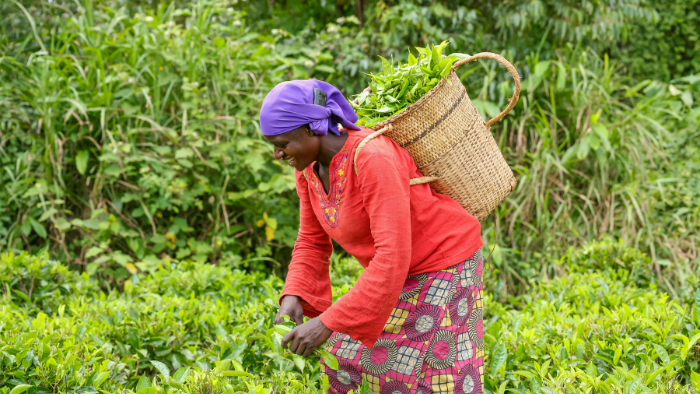
This dual dynamic is significant. The African Development Bank estimates Africa’s food and agriculture market could reach $1 trillion by 2030, driven by both rising consumption and export expansion.
With around 60% of the world’s uncultivated arable land, the continent is uniquely positioned to scale production where global systems are under strain.
Africa already plays a major role in global supply chains. Staple crops such as maize, cassava, rice, sorghum and millet remain central to both regional and international markets, while export commodities including cocoa, coffee, tea, cotton and sesame continue to see sustained global demand.
Fresh produce further strengthens this position. Kenya and South Africa are established exporters of avocados, citrus, bananas, pineapples and vegetables, supporting year-round supply into markets increasingly affected by climate volatility and freight disruption.
From Commodity Source to Manufacturing Partner
Africa’s opportunity now extends well beyond agriculture. Across the continent, governments and private investors are accelerating food processing, packaging, cold chain logistics, storage and industrial infrastructure.
For international buyers, this opens the door to new models of sourcing: processed foods, ingredients, private-label production and co-manufacturing partnerships closer to growth markets.
As costs increase in traditional manufacturing centres, Africa is becoming an increasingly attractive option for supply chain diversification.
A Market of the Future
Africa is not only producing for the world, but it is also increasingly buying from it. Expanding retail networks are driving demand for packaged foods, convenience products, premium categories and health-focused ranges.
Few regions offer the dual advantage of being both a high-potential supply base and a fast-growing consumer market. That combination makes Africa strategically important for the global food industry in 2026 and beyond.
Investment is already flowing into the sector. Africa’s agrifoodtech ecosystem continues to attract a significant share of venture funding, with leading hubs capturing a large proportion of continental investment activity.
Morocco generates over $8 billion in annual agri-food exports, supported by strong trade links with Europe and regional markets across Africa.
Egypt, with more than $20 billion in annual food imports, remains one of the continent’s most import-dependent and high-demand food markets. South Africa is also strengthening its position as a logistics and investment gateway, with DP World committing approximately $3 billion toward port and logistics infrastructure upgrades across Africa.
Why Kenya Leads the Conversation
Kenya has emerged as one of Africa’s most connected commercial hubs. Its diversified economy, advanced digital payments ecosystem, growing logistics capabilities and gateway position into East Africa make it a natural meeting point for regional and international trade.
Nairobi continues to serve as a launchpad for companies seeking access to the wider East African Community, while Kenya’s reputation for innovation and agrifood exports strengthens its global relevance.
The Route to New Partnerships
For businesses looking to future-proof supply chains, identify new sourcing partners and unlock growth across Africa, Gulfood 360 Africa – Kenya offers the ultimate platform.
Bringing together producers, exporters, manufacturers, investors, distributors and policymakers, the event creates direct access to the partnerships defining Africa’s next phase of agrifood growth.
As the global food map is redrawn, Africa is moving to the centre of it and Kenya is one of the gateways leading the way. Join us from 4-6 May 2027 at the Kenyatta International Convention Centre, Nairobi. Visit gulfood360kenya.com/ to learn more.